Scientific Teaching Fellows
Bring the spirit and rigor of research into the classroom.
Are you a graduate student or postdoc in the biosciences (or a related field) pursuing a career that includes college-level teaching? Scientific Teaching Fellows is a professional development program that can help you turn that interest into real experience.
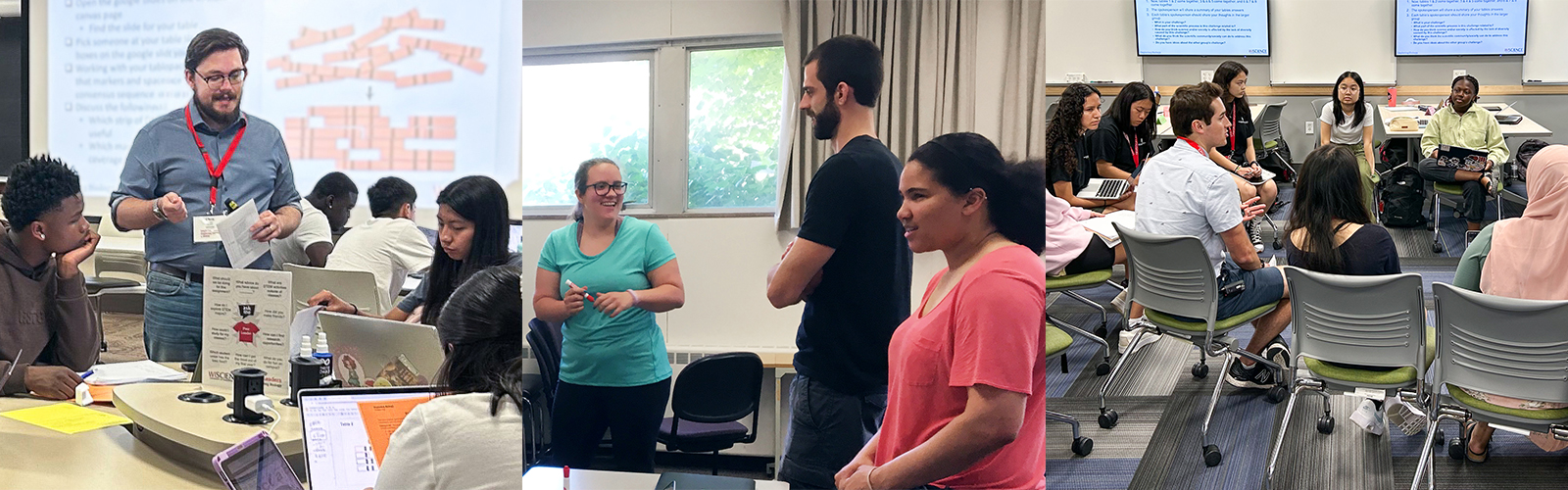
Over one year, Fellows get in-depth training with research-based, inclusive teaching, then apply what they learn by serving as instructors (not TAs!) for an undergraduate course. Through coursework and practical teaching experience, Fellows participate in a supportive community of colleagues and collaboratively develop innovative and effective ways to teach science.
Applications are now open!
Find more information below. Deadline: Sunday, October 25 at 11:59 PM.
About the program
Scientific Teaching Fellows is a professional development program that offers graduate students and postdocs in-depth preparation for careers teaching college-level science.
This program takes a unique approach, integrating training in college science teaching with practical teaching experience, all with an explicit emphasis on inclusive, research-based approaches.
Fellows learn about these approaches during the first semester, then apply them the next as they design instructional materials that engage students in active learning. In the final semester, Fellows implement what they’ve learned by collaborating to teach a UW–Madison undergraduate biosciences course. Fellows benefit from peer support and mentoring as they build their skills in all aspects of teaching.
Program at a glance
- Length: One calendar year (spring, summer, and fall semesters)
- Time commitment: About 4 to 12 hours per week (varies by phase)
- Courses: Three 1-credit seminars (INTEGSCI 650, 750, 850)
- Can count toward the Certificate in Higher Education Teaching and Learning.
- Application status: 2027 applications will open in fall
- Scientific Teaching Fellows is part of the Wisconsin Program for Scientific Teaching.
What you’ll do
As a Fellow, you’ll:
- Gain in-depth training in research-based teaching methods
- Serve as an instructor and gain firsthand experience designing and teaching a first-year biosciences course
- Become more effective at supporting a broad range of students and addressing issues of diversity and inclusion in teaching environments
- Develop instructional materials that encourage active learning, and test them in an authentic teaching setting
- Experience all aspects of teaching, from developing learning outcomes to managing a classroom environment to grading
- Join a community of peers from diverse bioscience disciplines who care about teaching and mentoring
How the program works
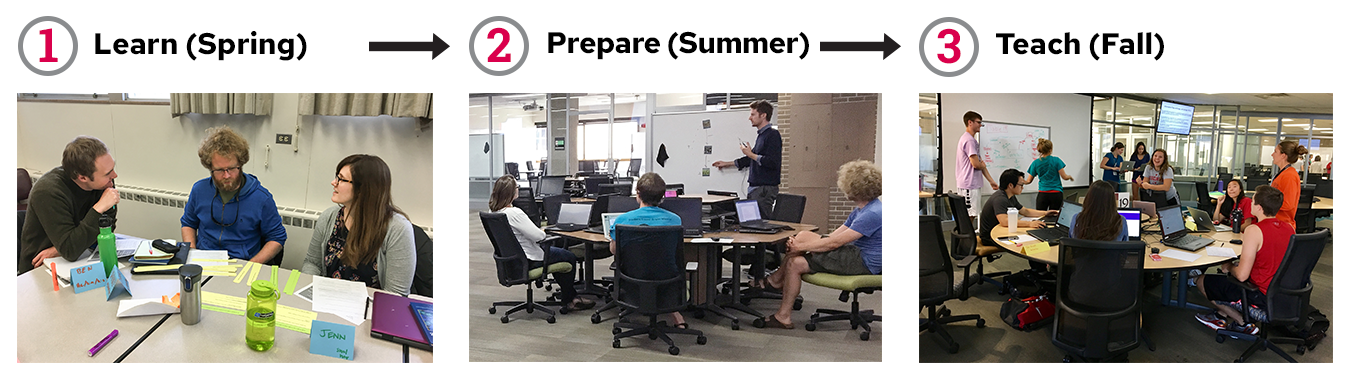
The program runs across three semester-long phases, each anchored by a one-credit seminar and mentored by the program director.
Fellows first learn about scientific teaching, then apply what they learned as they prepare to teach a course, and finally teach a real undergraduate course as instructors.
Before applying, please review the program expectations and time commitments below and discuss with your PI (or equivalent).
- Course: INTEGSCI 650 – College Science Teaching
- Schedule: Wednesdays, 9-11 A.M. (for spring 2027)
- Average time commitment: 3-4 hours per week
The course covers the fundamentals of learning theory and practical strategies for teaching college-level science. Fellows meet weekly to learn about and experience research-based teaching approaches while developing community around this shared experience. The cohort works together to learn the core themes of scientific teaching (active learning, assessment, and diversity) so that they can make informed decisions about their teaching in the future.
- Course: INTEGSCI 750 – Instructional Materials Design for College Science Teaching
- Schedule:
- Weekly meeting time: 2 hours per week (Time TBD)
- 2027 Teaching Fellows Summer Intensive: July 5–9 from 9 AM–1 PM each day
Average time commitment: 4–6 hours per week *
Fellows apply the pedagogical knowledge they learned in spring, meeting regularly to design instructional materials for the course they will teach in the fall. Fellows work together to design instructional units where they are responsible for identifying learning objectives and creating evidence-based assessments and learning experiences to target those objectives. They also focus on incorporating inclusive teaching principles into course curricula and teaching methods in order to support diverse learners.
* This time commitment varies as Fellows work through different stages of the materials development process. Regular meeting times will be scheduled around participant availability, with several weeks off for other personal and professional obligations. Fellows also participate in a retreat, the Teaching Fellows Summer Intensive, where they demo units, discuss feedback, and develop course plans.
- Course: INTEGSCI 850 – Mentored Practicum in College Science Teaching
- Schedule:
- Course meeting time: 1.5–2 hours per week (Time TBD)
- Teaching time: Mon OR Wed 2:25–4:20 P.M.
Average time commitment: 10-12 hours per week (including time spent grading, planning, and communicating with students)
Fellows continue to develop their skills in teaching college-level science by participating in a mentored, collaborative teaching experience. Fellows serve as the instructors for a UW–Madison undergraduate biosciences course, where they implement and refine instructional activities. They are able to see how theories of learning and teaching play out in real instructional settings while reflecting on their teaching experiences as part of a supportive community. Emphasis is placed on equity issues in the classroom and creating an inclusive learning environment that supports diverse students. Fellows also gain valuable skills in managing their own courses alongside other professional responsibilities.
Career outcomes
Scientific Teaching Fellows have gone on to have fulfilling careers, and many cite their experience in this program as an important part of their success.
Some positions held by past Fellows:
- Assistant Professor of Cellular and Molecular Biology (Carroll University)
- Assistant Professor/Agricultural Entomologist (University of Delaware)
- Assistant Professor (University of Cincinnati – Blue Ash College)
- Associate Instructional Professor (Biological Sciences Collegiate Division at University of Chicago)
- Full-Time Microbiology Instructor (Madison College)
- Assistant Director of Diversity, Equity, Inclusion, and Outreach (School of Molecular & Cellular Biology, University of Illinois)
- Program Director for Graduate and Postdoc Development (University of Notre Dame’s Kaneb Center for Teaching Excellence)
- Evaluation Specialist (Office of the Provost at Washington University in St. Louis)
- AAAS Science and Technology Policy Fellow (Hosted at the National Science Foundation)
Which teaching program is right for me?
WISCIENCE offers two other Fellows programs that involve teaching: one focused on teaching at community colleges, and one focused on teaching related to community engagement.
Eligibility
Review the eligibility requirements before starting your application.
You are eligible to apply if the following is true:
- Currently a graduate student in a PhD program or postdoctoral scholar at UW–Madison, and will continue to be through the fall 2027 semester.
- Interest in and enthusiasm for teaching, and a willingness to try new teaching approaches.
- Your major field of study involves the life sciences in some way (check with Dr. Cara Theisen if you have questions).
- Able to complete the program in its entirety, from January 2027–January 2028.
- This includes College Science Teaching in spring 2027, Instructional Materials Design for College Science Teaching in summer 2027, Mentored Practicum in College Science Teaching (including teaching and weekly meetings) in fall 2027, and compiling a teaching portfolio to wrap up the program.
- Approval from your PI/advisor to participate in this program (if accepted, you may be asked to provide this approval in writing).
There are no course prerequisites. Experience as a teaching assistant or participation in workshops/trainings/courses related to teaching is recommended, but not required.
How to apply
Applications for the 2027 program are open September 14–October 25. Read about the application process below.
Step 1: Talk to your PI/advisor
Your PI/advisor needs to approve your participation in the program. We will need this in writing if you are accepted. Plan to have this conversation before you submit your application.
Prepare for your conversation
If you’re not sure what to say to your PI, here are some prompts to think about beforehand to help guide your conversation.
- What do you hope to gain from this program?
- How will this program support your career goals?
- How will you manage your time and balance Fellows activities with other duties (e.g., research, TAing, etc.)?
- Based on where you’re at in your graduate or postdoc career, why is this year a good time to participate in this program?
Step 2: Fill out an application
A complete application has five parts. Here’s what to prepare and what each one should include.
Your online form should include:
- Your contact and program information
- A short blurb explaining your research in plain language for a lay audience (150 words or less)
Please highlight:
- Teaching experience (specify your role/responsibilities for each course)
- Research and mentoring experience
- Any courses, trainings, or workshops that you have taken related to teaching
Please address these topics:
- Why you are interested in this program
- What you consider important in undergraduate teaching and learning
- Your career goals
Include:
- A list of your existing obligations (research, teaching, etc.) and known conflicts from January 2027–January 2028, noting any periods you’d be unavailable for program responsibilities and any recurring weekly commitments.
- Your availability for the following (see How the Program Works for details):
- Spring 2027: Wednesdays from 9-11 AM (scheduled time for College Science Teaching).
- Summer 2027: July 5–9 from 9 AM–1 PM each day (Teaching Fellows Summer Intensive), and any other recurring commitments when you would not be available for weekly meetings.
- Note: Applications will still be considered from individuals who are not available at these times. However, applications may be prioritized based on availability depending on the number of applications.
- Fall 2027: Teaching EITHER Monday OR Wednesday from 2:25-4:20 PM, and any other recurring commitments when you would not be available for weekly meetings.
This will allow us to verify your eligibility to teach in the subjects that interest you.
Step 3: Interview (for select applicants)
Select applicants will be invited to an interview. This will be a group interview with several other applicants. Each interview will include group and individual portions.
The interview is an opportunity to share more about yourself, your career goals, and what you hope to get out of the program. It’s also a good opportunity to learn more about what participation in the program would be like.
On the application, you will be asked about dates you are available for an interview. Knowing your availability helps us plan interviews; it does not impact your eligibility.
Testimonials
Being able to teach a class independently as a graduate student while having the guidance and mentorship of the director and my peers was invaluable….[This program] provided me with the skills and practice of high-quality teaching.
I use the skills I developed in the Teaching Fellows Program daily. This was one of the most valuable things I could have done as a graduate student. It made me a competitive applicant for tenure-track positions….
[This program] changed the way I thought about education and research. I’m truly thankful that I was able to learn pedagogy theory with the teaching fellows program, and I still refer back to frameworks of thinking that I initially learned during my training. To my surprise, learning to teach helped me organize and communicate my research better.
My favorite part [of being a Fellow] was the community and working toward something together. We learned together, developed learning materials together, and ultimately, taught a real undergraduate course together.
I gained so many important skills related to inclusive pedagogy, evidence-based scientific teaching, how to plan and design curriculum, and how to work effectively within teams. These are skills I continue to implement in my roles post-graduation.
The structure of the program was my favorite part. I loved how we learned, created, and then put our knowledge and curriculum into practice. The collaborative nature of this process was also very educational.
Fellow and alumni profiles
Get to know some of our Scientific Teaching Fellows and program alumni and learn about their experiences.
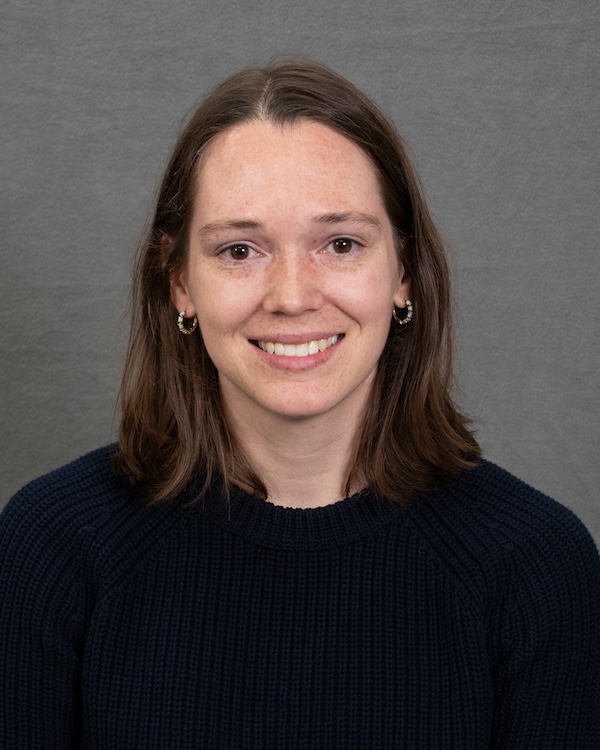
Meet Hannah Doll, 2025 Scientific Teaching Fellow
“Being a teacher is such a valuable opportunity to participate in a student’s growth. It’s extremely rewarding to help students learn how to solve difficult problems on their own.”
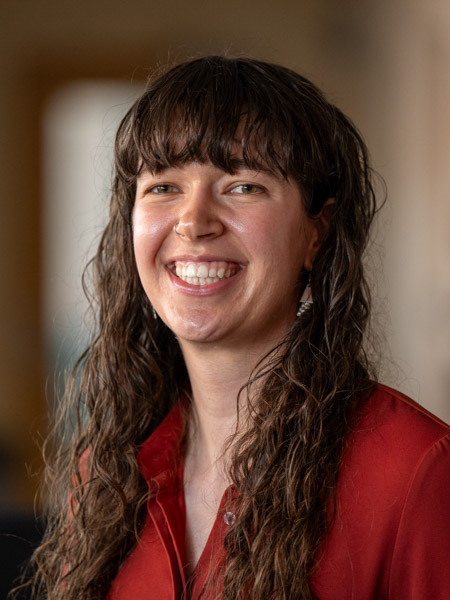
Meet Corinne Moss, 2025 Scientific Teaching Fellow
“I have found it so valuable to learn about all of the different factors that influence students’ experiences and the classroom environment, as well as hear from other fellows about how they have experienced these factors in their teaching and lives.”
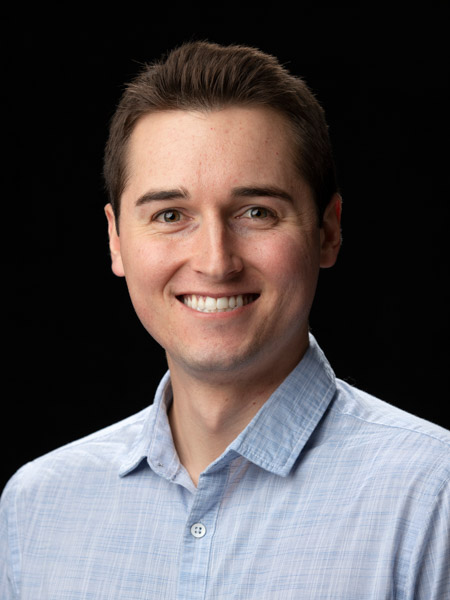
Meet Ben Hall, Scientific Teaching Fellow Alum
“We were constantly encouraged to reflect on what we were learning and how we could improve student learning, which helped me leave the STF program with a much deeper appreciation for pedagogy than I ever could have hoped to obtain on my own.”

Meet Fátima Sancheznieto, Scientific Teaching Fellow Alum
“The principles of scientific teaching are incredibly valuable to anyone who wishes to go into STEM education or education research.”
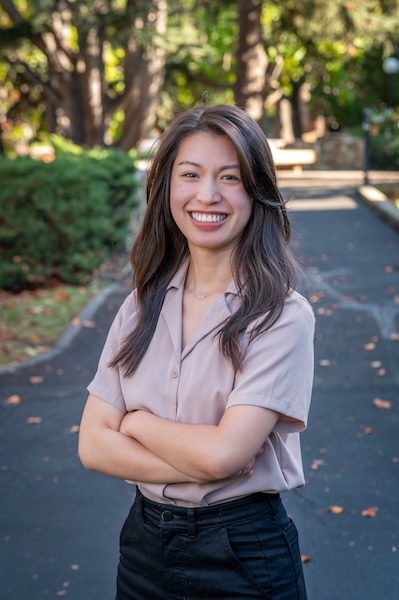
Meet Tina Wu, Scientific Teaching Fellows Alum
“I gained so many important skills related to inclusive pedagogy, evidence-based scientific teaching, how to plan and design curriculum, and how to work effectively within teams.”
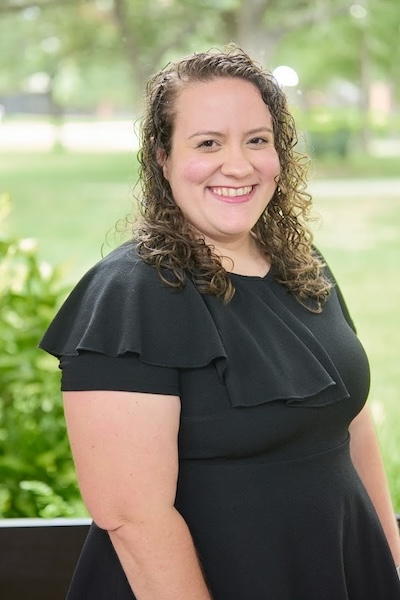
Meet Sofía Macchiavelli Girón, Scientific Teaching Fellow Alum
“This program gave me the chance to explore my creativity and my critical thinking skills to create teaching materials from scratch, which has been what I’ve had to do in my current position.”
FAQ
Eligibility and credit
You may be, depending on your background. We have had past Fellows from disciplines beyond the biological sciences who have some background in biology.
Fellows teach a first-year course called Exploring Biology. While the course isn’t designed to give students a foundation in introductory biology concepts, it is organized around biology topics (selected by the Fellows) and emphasizes major conceptual themes in biology (evolution, structure and function, energy and matter, information flow, systems). Fellows are required to teach these concepts and to engage students in a topic that fits under the umbrella of “Exploring Biology.”
If you are up for this challenge and feel like this is something you could do, you are welcome to apply. Please address this in your personal statement to help the review committee understand how your background and experience have prepared you to teach in the biosciences.
Yes, it is possible to participate in the first year of your program. Talk to your PI about when might be the best time for you. Many people decide that it works better to participate later in their program (typically after they have completed prelims in their second or third year), but this is an individual decision.
While we are glad to hear that you have an interest in the program, Teaching Fellows is intended for current postdocs and grad students. There are many other excellent opportunities on campus that you might consider, including a variety of workshops and classes by Delta and offerings through the Center for Teaching, Learning, and Mentoring.
It is not required that you have previously participated in any trainings related to teaching. We do recommend that applicants either have some previous experience teaching OR participation in workshops/trainings/courses related to teaching or mentoring.
Postdocs do not enroll for credit but are expected to fully participate as if they were enrolled in the class. Postdocs can still list this program on their CV.
Fellows still teach and grade through finals week in fall, so if you will miss these days, you are not eligible to serve as a Fellow. For people who will not on campus after the end of fall semester (into January), you are eligible as long as you would be able to complete program wrap-up tasks remotely.
No. The Scientific Teaching Fellows is a professional development program, not a paid position.
Logistics
The class is team-taught. Each Teaching Fellow will be responsible for planning and teaching a 3-4 week-long unit. This will involve planning learning activities (not just lectures), designing assessments, and creating instructional materials. However, your involvement in the class is not limited to these 3-4 weeks. Teaching Fellows are in class every class period for the entire semester, helping to facilitate the activities and interacting with students during the weeks the other Teaching Fellows are leading their units. Other responsibilities throughout the semester include grading student work, communicating with students, and giving feedback to the other Fellows on their teaching.
The total time commitment in fall is 10–12 hours per week (about 2 hours in class, 2-3 hours in planning meetings, 1 hour in office hours, 3-4 hours grading and planning, and 2 hours in professional development meetings). This is the teaching practicum phase, when Fellows teach a first-year course called Exploring Biology. Class meets on Monday or Wednesday afternoon and Fellows attend their assigned section each week. See more information on the Program Components tab.
Each Teaching Fellow designs their unit with another Teaching Fellow. There is not a preset curriculum to teach (we want everyone to have the experience of designing their own materials “from scratch”) but there are previously established learning objectives that the Teaching Fellows are expected to address. For example, each Teaching Fellow incorporates the major conceptual themes in biology (evolution, structure and function, energy and matter, information flow, systems) into their unit. The main work of planning the unit happens over the summer. The course that is offered in spring provides training on how to design and teach college-level STEM courses, like the Exploring Biology course Fellows teach in the fall.
Both Fellows Programs have coursework focused on scientific teaching, and they include the same coursework in spring and summer. However, they have very different teaching experiences in fall. For example, Scientific Teaching Fellows teach collaboratively at UW–Madison, while Madison College Teaching Fellows teach independently at Madison College. Find more details on the differences here.
The Teaching Fellows program is a year-long, cohort-based program that integrates college science teaching with the experience of teaching a real undergraduate course. The Delta program offers a number of stand-alone seminars, courses, and workshops, but they are not connected to practical teaching experience the way that the Teaching Fellows program is. Both Delta courses and the courses that are part of the Scientific Teaching Fellows program count towards the Graduate Certificate in Higher Education Teaching and Learning.
A: We have received your application and will be notifying all applicants about our decisions by mid-December. In the meantime, you could check out other opportunities on campus to expand your knowledge and skills in teaching—specifically, through Delta and the Center for Teaching, Learning, and Mentoring.
While we do not have a page limit, we encourage you to highlight the experiences that are most relevant for this program. Be sure to include any teaching/mentoring experience, as well as any trainings related to teaching and mentoring that you have attended.
Application/benefits of program
Yes. While the particular course the Fellows teach is based on biology, the practical experience of developing and teaching a course is valuable for any field, and those lessons can be applied fairly broadly to scientific college teaching.
Additionally, the College Science Teaching course that Fellows take gives you an overview of scientific teaching and effective practices more generally. This part of the program would easily give you a foundation to apply in any type of scientific college classroom, and even beyond teaching at the college level.
You may reach out to Dr. Cara Theisen with any further questions about the program.
Contact
More WISCIENCE Fellows Programs
WISCIENCE offers three year-long Fellows Programs in teaching and community engagement. See all three to compare their focus, time commitment, and deadlines.