Meet Gabriela P. Romero-González, CMBS Summer Research Student
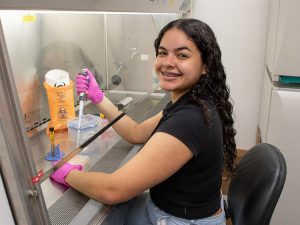
Gabriela P. Romero-González came to UW–Madison to participate in the Cellular and Molecular Biology of Stress Summer Research Program organized by WISCIENCE. During this 10-week program, Gabriela got hands-on research experience in the Knoll Lab while also learning about research careers and practicing science communication skills.
Gabriela comes from Canóvanas, Puerto Rico, and she’s majoring in microbiology at Universidad Ana G. Méndez, Carolina, PR. She works in two clinical laboratories and is interested in studying how host–pathogen interactions influence the progression of infectious diseases and their effects on public health worldwide. Outside of her studies, she enjoys watching TV series and traveling.
Briefly, what is the research project you are working on right now?
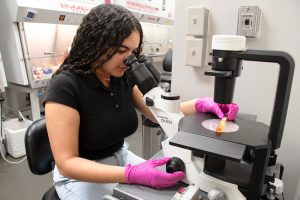
We are studying the growth and virulence of the enteric parasite Entamoeba histolytica at different growth angles on a 3D-printed custom cell culture rack.
What led you to apply for this program?
I applied to the CMBS Summer Research Program because it’s an excellent opportunity to explore new areas that complement my current studies and provide meaningful preparation for graduate school. I’m particularly interested in how cells respond to stress, given its relevance to disease mechanisms and host-pathogen interactions. I was also drawn to the program’s emphasis on research communication through writing and presentations. I believe that strengthening our ability to communicate science is essential to our growth as scientists, as it allows us to share knowledge, inspire collaboration, and contribute to the development of new projects that protect and improve human health.
What has the program been like for you so far?
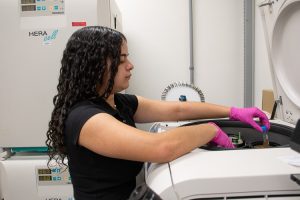
So far, the program has been incredibly enriching. I’ve gained hands-on experience in the lab, learned new techniques, and improved my approach to experimental design. The mentorship and collaborative environment have truly enhanced my experience, making me feel supported and encouraged to grow both as a student and a future scientist.
What is something interesting or surprising that you’ve learned or done in this program?
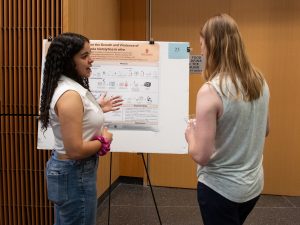
One of the most interesting parts of the program was creating a research proposal poster focused on cellular stress. Although it wasn’t my first time designing a scientific poster, it was my first time preparing one based on a proposal rather than finalized data. The process allowed me to organize my ideas clearly, highlight the scientific rationale, and present my experimental approach. I also deepened my understanding of cellular stress responses and their connection to disease, which made the experience especially valuable.
What has been the most valuable part of your lab experience this summer?
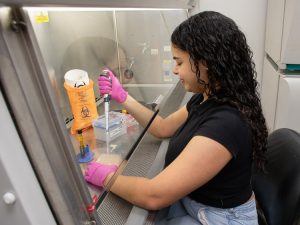
The mentorship and collaboration in the lab were the most valuable parts for me. Having the chance to learn directly from experienced researchers, ask questions, and be part of a team made the research process much more engaging and rewarding. I also had the opportunity to work with Entamoeba histolytica in vitro and gain hands-on experience with human cell cultures, which expanded my technical skills and deepened my understanding of host–parasite interactions.
How do you think your experience here will impact your goals for the future?
This experience has broadened my perspective on the possibilities within biomedical research. It showed me how research can drive innovation and improve health outcomes, and it reinforced my interest in being part of that process. Through hands-on work, mentorship, and exposure to new techniques, I’ve strengthened my research skills and gained clarity about the role I aspire to play in advancing scientific knowledge. I feel more prepared to pursue graduate studies and excited to continue growing as a researcher.
What advice would you give to future CMBS students?
My advice would be to take full advantage of every opportunity the program offers during laboratory work, seminars, or workshops. Don’t feel like you need to know everything before you start; the program is designed to help you grow. Asking questions and making mistakes are essential parts of the learning process, so don’t hesitate to do either. Come in with curiosity, an open mind, a readiness to receive feedback, and a willingness to learn. Trust the process—you’ll learn more than you expect.
Learn more about the CMBS Summer Research Program.