Meet Noah Venable, CMBS Summer Research Student
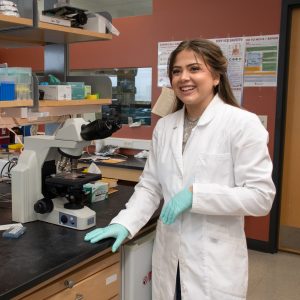
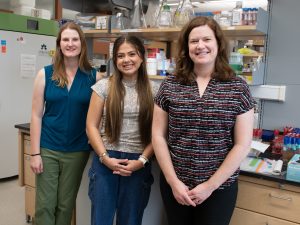
Noah Venable came to UW–Madison to participate in the Cellular and Molecular Biology of Stress Summer Research Program organized by WISCIENCE. During this 10-week program, Noah got hands-on research experience in the Majumder Lab while also learning about research careers and practicing science communication skills.
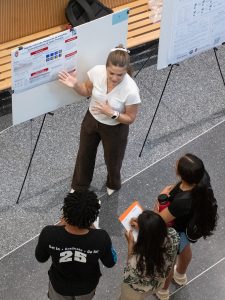
Noah, who comes from Springfield, Missouri, is majoring in ACS Chemistry at Drury University. She enjoys biochemistry and microbiology research along with connecting ideas from coursework to hands-on experience. Outside of her studies, Noah loves to hike, read, go to coffee shops, go shopping, and eat sit-down dinners with friends.
Briefly, what is the research project you are working on right now?
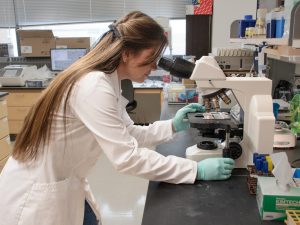
Presently, my research project within the CMBS program is assessing the toxicity of ionic hydrologic tracers at varying concentrations. This research is significant to understanding the impact of hydrology methodology on microbes within the environment.
What led you to apply for this program?
I was drawn to the program because of the interdisciplinary research and professional development opportunities. As a chemistry major, I was interested in gaining applied research experience to connect ideas from coursework to hands-on experiments. I was interested in the perspective and personal growth that accompanies the level of research independence within graduate school.
What has the program been like for you so far?
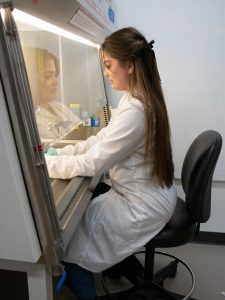
The CMBS Summer Research Opportunities program has been incredibly affirming and influential, not only in my research self-efficacy, but to my identity and role as an undergraduate research scientist. Meeting peers with similar interests and motivations, making professional connections with faculty and graduate students, and completing research that I enjoy only begin to cover the memories and experiences I have gained while in the program.
What is something interesting or surprising that you’ve learned or done in this program?
The most surprising growth or learning has come from unexpected places, such as in the weekly professional development sessions, where we have completed hands-on activities to better understand our role as scientists. Whether that is new ways to view the scientific method, properly reporting research findings, or accepting that sometimes failure is a step towards success, this program has been a very beneficial learning experience resulting from professional development sessions and communications with professionals in the field.
What has been the most valuable part of your lab experience this summer?
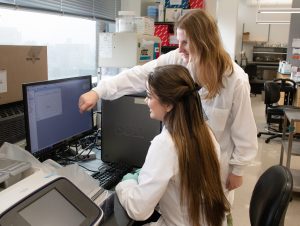
I believe that the most valuable part of my lab experience this summer has been getting to learn how graduate students think and operate themselves independently as scientists. As someone who comes from a primary undergraduate institution, I had no prior experience in what graduate school looks like or how it functions. With a greater understanding of graduate school, I have become more confident in my passions and gained more security in my future aspirations.
How do you think your experience here will impact your goals for the future?
This experience will impact my future goals with security and sureness, because following this program, I feel empowered to pursue graduate school and my ability to establish myself as a scientist. I am grateful that I have had this opportunity to connect with those within academia and industry, and I believe that the connections made because of the program will carry the most value both personally and professionally. Those in my lab and within the program have influenced me to believe in myself, and they have contributed to my motivation to continue pursuing my passions.
What advice would you give to future CMBS students?
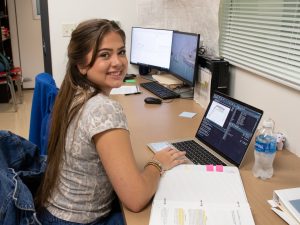
If I was to prepare myself a few months ago for this program, I would have emphasized the importance of independence and self-motivation. Set-backs and failures are the part of science that sow seeds of curiosity, lean into the hard questions and assessment of your technique and methodology. Without curiosity and the ability to forgive yourself for mistakes, you cannot expect to grow. Ten weeks goes by quickly, so I would advise that you make the most of the time you are given and draw conclusions and lessons from all experiences.
Learn more about the CMBS Summer Research Program.